
Beyond the Body: A Free Recovery Program for Veterans and First Responders
Recovery asks more of a person than their body alone can answer — and the support for that second half is often free, if you know where to look.
At Touchstone Rehabilitation, we spend our days on the measurable side of recovery. Gait speed. Transfer independence. Shoulder mechanics in a manual chair. Standing tolerance in an exoskeleton. Those numbers matter, and they change lives. But anyone who has walked a patient through a spinal cord injury, an amputation, or a stroke knows the honest truth: the body often makes progress before the person feels like themselves again.
That gap is especially wide for veterans and first responders. Many of the people we treat carried something heavy long before the injury that brought them to us. For those patients and their families, we want to point to a resource we think is worth knowing about — the Mighty Oaks Foundation.
Why The Emotional Side Of Recovery Deserves Its Own Plan
Physical therapy and occupational therapy can restore an enormous amount of function. What they cannot do on their own is resolve the grief, identity loss, hypervigilance, or moral injury that a service member or first responder may be carrying alongside a new disability.
We see the pattern often. A patient hits every clinical benchmark, but the sessions still feel like a fight. Motivation dips. Home programs go undone. Family members describe someone who is present but not really there. In cases like these, the limiting factor is rarely strength or range of motion. It is that no one has built a plan for the part of recovery that does not show up on an evaluation form.
Treating that as a separate problem, with its own resources and its own support network, tends to make the physical work go better too.
What The Mighty Oaks Foundation Does
Mighty Oaks is a national nonprofit that runs five-day intensive recovery programs for veterans, active-duty service members, first responders, and military spouses. It was founded by Chad Robichaux, a former Force Recon Marine who started the work after his own struggle with post-traumatic stress following deployments to Afghanistan.
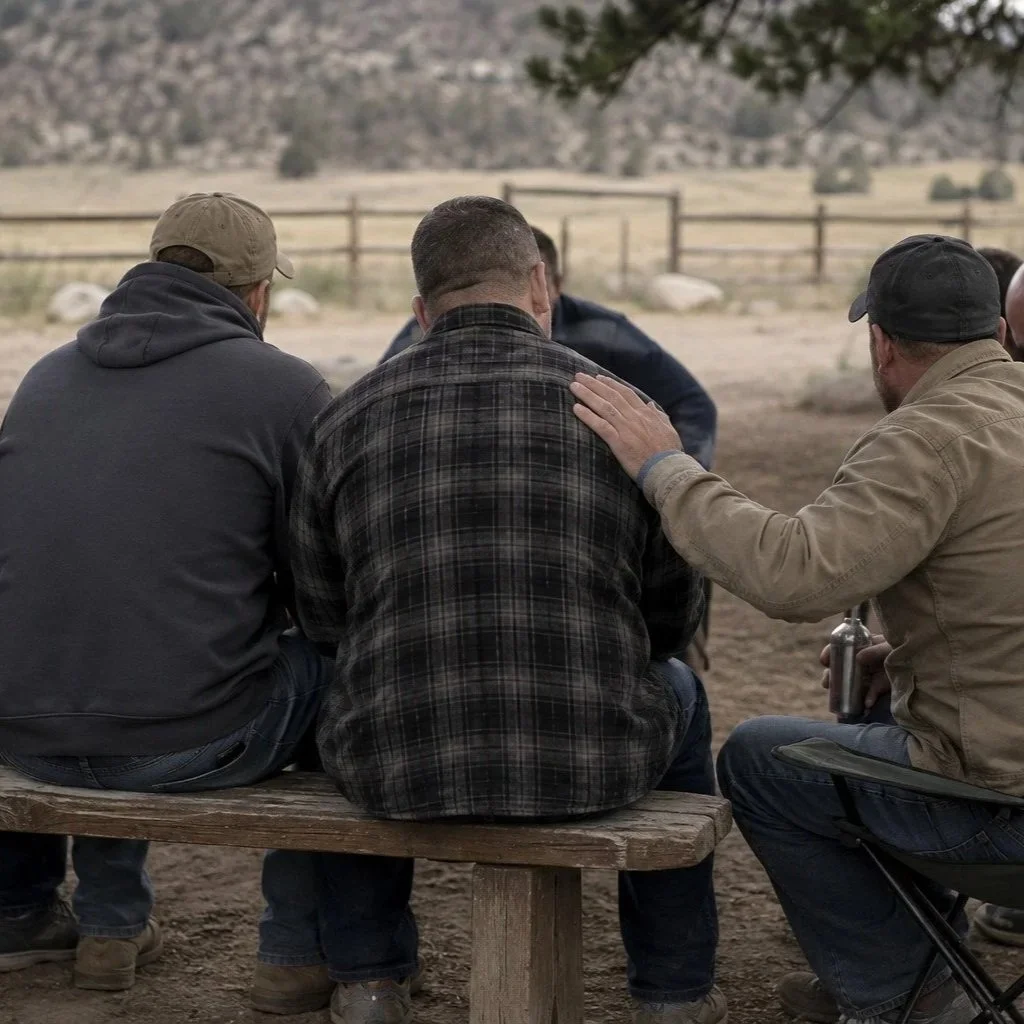
The programs are peer-led. That is the core of the model — the people teaching and mentoring have lived versions of what participants are carrying. Sessions combine small-group work, mentorship, teaching, and time outdoors at ranch properties, with participants staying together for the full five days rather than commuting in and out.
The organization runs separate Men's and Women's Legacy Programs, a program for married couples, and a program serving foreign military interpreters and Special Immigrant Visa holders. It reports that more than 7,000 men and women have completed a Mighty Oaks program.
Programs are held at five ranch properties around the country — in California, Ohio, Virginia, and two locations in Texas — though not every program runs at every site. The women's programs, for example, are currently offered at three of the five.
It Is Free — Including The Flight
This is the part most people do not expect, so it is worth stating plainly. Mighty Oaks programs cost participants nothing. That covers lodging, meals, and program materials, and it also covers travel — flights and ground transportation to and from the ranch.
There is no fee structure, no sliding scale, and no insurance to bill. For a patient already managing the cost of durable medical equipment, home modifications, or unpaid time away from work, removing the financial question changes whether the resource is realistically available at all.
Who Qualifies
Eligibility is broader than most people assume. Mighty Oaks serves veterans, active-duty military, and first responders — including law enforcement officers, firefighters, and EMTs and paramedics — along with military spouses.
There is no diagnosis requirement, no VA referral, and no minimum length of service. A patient does not need a documented PTSD diagnosis or a combat deployment on their record to apply.
One Thing To Know Going In
Mighty Oaks is explicitly faith-based. The teaching and mentorship are rooted in Christian principles, and the organization publishes a statement of faith on its website. It also states plainly that while it is a Christian organization, it welcomes attendees from all backgrounds, experiences, and beliefs.
We mention this up front out of respect for our patients, not as a caveat. For many veterans and first responders, that framework is exactly what makes the program meaningful. For others, it may not be the right fit, and that is a fair conclusion to reach before applying rather than after arriving. Either way, the decision belongs to the patient, and it should be an informed one.
Touchstone Rehabilitation is not affiliated with the Mighty Oaks Foundation. We are sharing this resource because our patients have asked us where to turn, and this is a real answer that costs them nothing to explore.
How Mighty Oaks Fits Alongside Therapy
A five-day program is not a substitute for a rehabilitation plan, and Mighty Oaks does not present it as one. Think of it as a different lane running parallel to the clinical work.
Practically, the timing is worth planning. A week away means a week of missed sessions, so it helps to talk with your therapy team before applying so the schedule can be adjusted, home programming can be set up, and any equipment or accessibility needs can be communicated to the organization ahead of time. Patients using an exoskeleton, an AlterG treadmill, or aquatic therapy in their current program can usually shift the calendar without losing ground, as long as the plan is made in advance rather than in hindsight.
How To Apply
Applications are submitted through the Mighty Oaks website at mightyoaksprograms.org. A program coordinator typically responds within 24 to 48 hours and works with the applicant to schedule placement in the next available session. About 50 days before the program start date, participants receive a confirmation email verifying that they are still able to attend.
If you are a Touchstone patient and want help thinking through timing, accessibility questions, or how a week away would affect your current plan of care, bring it up at your next visit. We would rather build the schedule around it than have you skip it.
FAQs
Do I need a PTSD diagnosis to attend a Mighty Oaks program?
No. Mighty Oaks does not require a diagnosis, a VA referral, or a minimum length of service. Veterans, active-duty service members, first responders, and military spouses can apply directly.
Is the program really free?
Yes. Mighty Oaks covers lodging, meals, program materials, and travel, including flights and ground transportation. Participants are not billed and there is no insurance component.
How often should orthotic or prosthetic devices be adjusted?
Adjustments are typically needed periodically as strength, activity level, and body composition change. Regular follow-up appointments help ensure the device continues to fit properly and perform as intended.
How long is the program and where does it take place?
The Legacy Programs run five days and are held at five ranch properties across California, Ohio, Virginia, and Texas. The foundation is headquartered in Montgomery, Texas.
Can spouses attend?
Yes. Spouses of veterans, service members, and first responders are eligible, and Mighty Oaks also runs a separate program designed for married couples. The Legacy Programs are separated by gender, with distinct curricula for the men's and women's sessions.
Does attending mean pausing my physical or occupational therapy?
It usually means adjusting the schedule for that week rather than pausing care. Let your therapy team know before you apply so home programming and follow-up sessions can be planned around the dates.
Touchstone Rehabilitation is a physical therapy and occupational therapy expert offering spinal cord injury rehabilitation, neurological rehabilitation, prosthetic rehabilitation, amputee rehabilitation, aquatic therapy, vestibular rehabilitation, and vocational rehabilitation in Phoenix, Arizona. Get in touch with our team to book a consultation.